Today
20
in History
26
January
February
March
April
May
June
July
August
September
October
November
December
01
Sun
02
Mon
03
Tue
04
Wed
05
Thu
06
Fri
07
Sat
08
Sun
09
Mon
10
Tue
11
Wed
12
Thu
13
Fri
14
Sat
15
Sun
16
Mon
17
Tue
18
Wed
19
Thu
20
Fri
21
Sat
22
Sun
23
Mon
24
Tue
25
Wed
26
Thu
27
Fri
28
Sat
29
Sun
30
Mon
...
11-20-1923
Garrett Morgan patents three‑position traffic signal
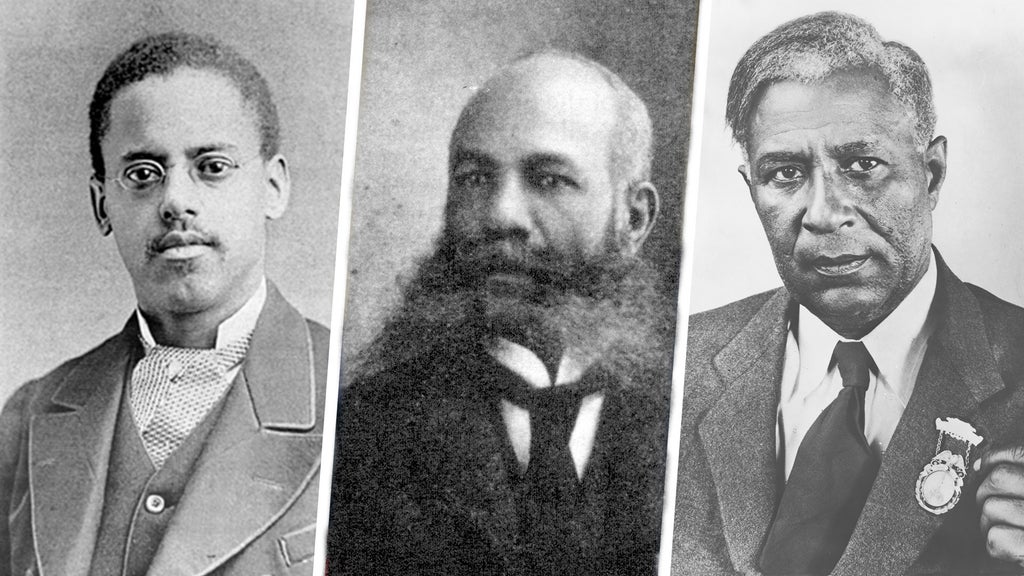
On November 20, 1923, the U.S. Patent Office grants Patent No. 1,475,074 to 46-year-old inventor and newspaperman Garrett Morgan for his three-position traffic signal. Though Morgan’s was not the first traffic signal (that one had been installed in London in 1868), it was an important innovation nonetheless: By having a third position besides just “Stop” and “Go,” it regulated crossing vehicles more safely than earlier signals had.
Morgan, the child of two formerly enslaved people, was born in Kentucky in 1877. When he was just 14 years old, he moved north to Ohio to look for a job. First he worked as a handyman in Cincinnati; next he moved to Cleveland, where he worked as a sewing-machine repairman. In 1907, he opened his own repair shop, and in 1909 he added a garment shop to his operation. The business was an enormous success, and by 1920 Morgan had made enough money to start a newspaper, the Cleveland Call, which became one of the most important Black newspapers in the nation.
Morgan was prosperous enough to have a car at a time when the streets were crowded with all manner of vehicles: Bicycles, horse-drawn delivery wagons, streetcars and pedestrians all shared downtown Cleveland’s narrow streets and clogged its intersections. There were manually operated traffic signals where major streets crossed one another, but they were not all that effective: Because they switched back and forth between Stop and Go with no interval in between, drivers had no time to react when the command changed. This led to many collisions between vehicles that both had the right of way when they entered the intersection. As the story goes, when Morgan witnessed an especially spectacular accident at an ostensibly regulated corner, he had an idea: If he designed an automated signal with an interim “warning” position—the ancestor of today’s yellow light—drivers would have time to clear the intersection before crossing traffic entered it.
The signal Morgan patented was a T-shaped pole with three settings. At night, when traffic was light, it could be set at half-mast (like a blinking yellow light today), warning drivers to proceed carefully through the intersection. He sold the rights to his invention to General Electric for $40,000.
More news today
loading...