Today
20
in History
26
January
February
March
April
May
June
July
August
September
October
November
December
01
Sun
02
Mon
03
Tue
04
Wed
05
Thu
06
Fri
07
Sat
08
Sun
09
Mon
10
Tue
11
Wed
12
Thu
13
Fri
14
Sat
15
Sun
16
Mon
17
Tue
18
Wed
19
Thu
20
Fri
21
Sat
22
Sun
23
Mon
24
Tue
25
Wed
26
Thu
27
Fri
28
Sat
29
Sun
30
Mon
...
11-05-1940
FDR re‑elected for a third term
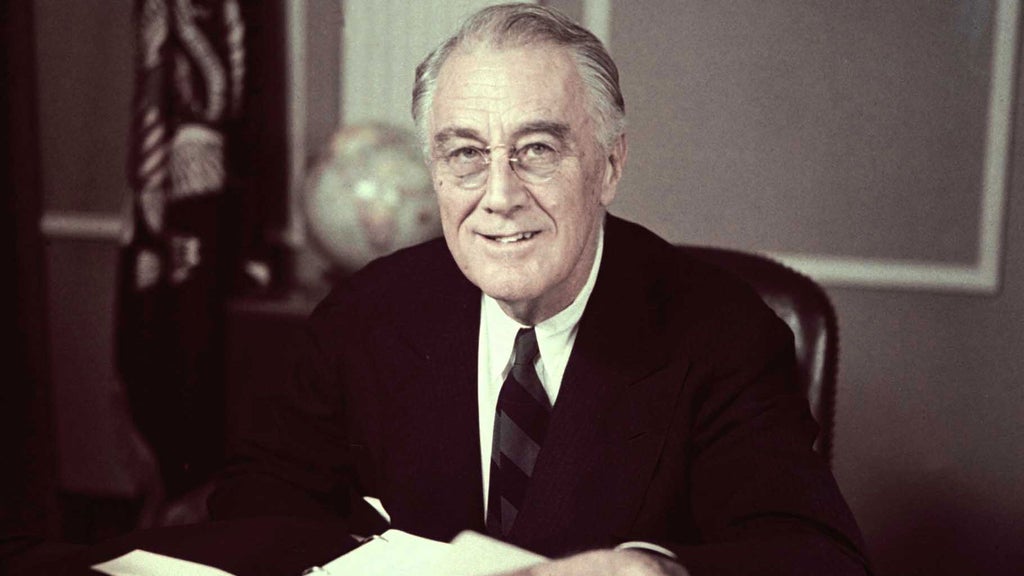
On November 5, 1940, Franklin Delano Roosevelt is re-elected for an unprecedented third term as president of the United States.
Roosevelt was elected to a third term with the promise of maintaining American neutrality as far as foreign wars were concerned: “Let no man or woman thoughtlessly or falsely talk of American people sending its armies to European fields.” But as Hitler’s war spread, and the desperation of Britain grew, the president fought for passage of the Lend-Lease Act in Congress, in March 1941, which would commit financial aid to Great Britain and other allies. In August, Roosevelt met with British Prime Minister Winston Churchill to proclaim the Atlantic Charter, which would become the basis of the United Nations; they also drafted a statement to the effect that the United States “would be compelled to take countermeasures” should Japan further encroach in the southwest Pacific.
Despite ongoing negotiations with Japan, that “further encroachment” took the form of the Japanese bombing of Pearl Harbor—”a day that would live in infamy.” The next day Roosevelt requested, and received, a declaration of war against Japan. On December 11, Germany and Italy declared war on the United States.
Certain wartime decisions by Roosevelt proved controversial, such as the demand of unconditional surrender of the Axis powers, which some claim prolonged the war. Another was the acquiescence to Joseph Stalin of certain territories in the Far East in exchange for his support in the war against Japan. Roosevelt is often accused of being too naive where Stalin was concerned, especially in regard to “Uncle Joe’s” own imperial desires.
More news today
loading...