Today
20
in History
26
January
February
March
April
May
June
July
August
September
October
November
December
01
Thu
02
Fri
03
Sat
04
Sun
05
Mon
06
Tue
07
Wed
08
Thu
09
Fri
10
Sat
11
Sun
12
Mon
13
Tue
14
Wed
15
Thu
16
Fri
17
Sat
18
Sun
19
Mon
20
Tue
21
Wed
22
Thu
23
Fri
24
Sat
25
Sun
26
Mon
27
Tue
28
Wed
29
Thu
30
Fri
31
Sat
...
10-17-1974
President Ford explains his pardon of Nixon to Congress
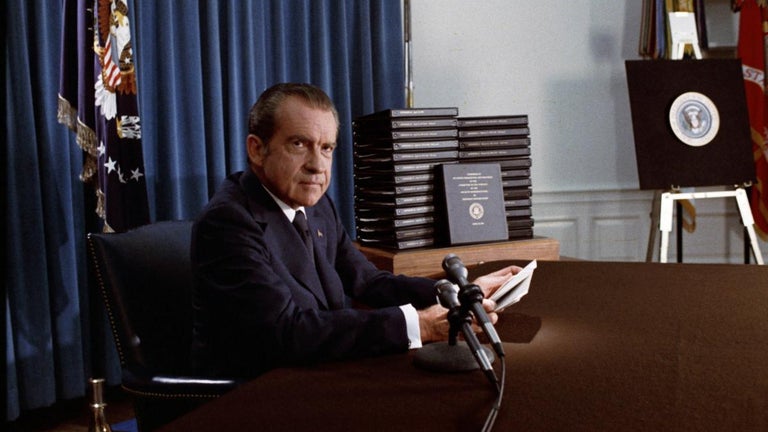
On October 17, 1974, President Gerald Ford explains to Congress why he had chosen to pardon his predecessor, Richard Nixon, rather than allow Congress to pursue legal action against the former president.
Congress had accused Nixon of obstruction of justice during the investigation of the Watergate scandal, which began in 1972. White House tape recordings revealed that Nixon knew about and possibly authorized the bugging of the Democratic National Committee offices, located in the Watergate complex in Washington D.C. Rather than be impeached and removed from office, Nixon chose to resign on August 8, 1974.
When he assumed office on August 9, 1974, Ford, referring to the Watergate scandal, announced that America’s “long national nightmare” was over. There were no historical or legal precedents to guide Ford in the matter of Nixon’s pending indictment, but after much thought, he decided to give Nixon a full pardon for all offenses against the United States in order to put the tragic and disruptive scandal behind all concerned. Ford justified this decision by claiming that a long, drawn-out trial would only have further polarized the public. Ford’s decision to pardon Nixon was condemned by many and is thought to have contributed to Ford’s failure to win the presidential election of 1976.
From his home in California, Nixon responded to Ford’s pardon, saying he had gained a different perspective on the Watergate affair since his resignation. He admitted that he was “wrong in not acting more decisively and more forthrightly in dealing with Watergate, particularly when it reached the stage of judicial proceedings and grew from a political scandal into a national tragedy.”
More news today
loading...