Today
20
in History
26
January
February
March
April
May
June
July
August
September
October
November
December
01
Wed
02
Thu
03
Fri
04
Sat
05
Sun
06
Mon
07
Tue
08
Wed
09
Thu
10
Fri
11
Sat
12
Sun
13
Mon
14
Tue
15
Wed
16
Thu
17
Fri
18
Sat
19
Sun
20
Mon
21
Tue
22
Wed
23
Thu
24
Fri
25
Sat
26
Sun
27
Mon
28
Tue
29
Wed
30
Thu
31
Fri
...
07-10-1962
U.S. patent issued for three‑point seatbelt
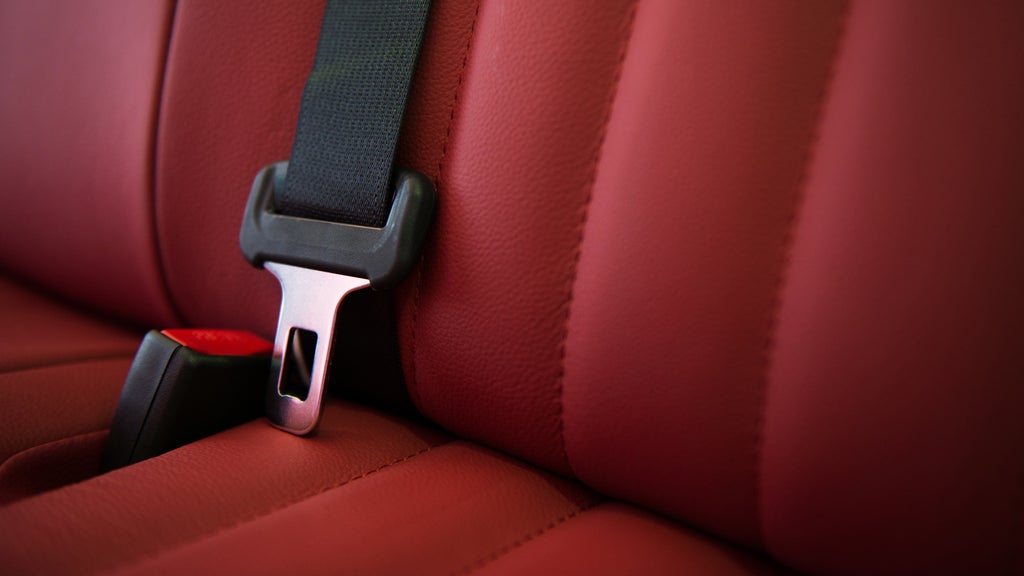
The United States Patent Office issues the Swedish engineer Nils Bohlin a patent for his three-point automobile safety belt “for use in vehicles, especially road vehicles” on July 10, 1962.
Four years earlier, Sweden’s Volvo Car Corporation had hired Bohlin, who had previously worked in the Swedish aviation industry, as the company’s first chief safety engineer. At the time, safety-belt use in automobiles was limited mostly to race car drivers; the traditional two-point belt, which fastened in a buckle over the abdomen, had been known to cause severe internal injuries in the event of a high-speed crash. Bohlin designed his three-point system in less than a year, and Volvo introduced it on its cars in 1959. Consisting of two straps that joined at the hip level and fastened into a single anchor point, the three-point belt significantly reduced injuries by effectively holding both the upper and lower body and reducing the impact of the swift deceleration that occurred in a crash.
On August 17, 1959, Bohlin filed for a patent in the United States for his safety belt design. The U.S. Patent Office issued Patent No. 3,043,625 to “Nils Ivar Bohlin, Goteborg, Sweden, assignor to Aktiebolaget Volvo” on July 10, 1962. In the patent, Bohlin explained his invention: “The object… is to provide a safety belt which independently of the strength of the seat and its connection with the vehicle in an effective and physiologically favorable manner retains the upper as well as the lower part of the body of the strapped person against the action of substantially forwardly directed forces and which is easy to fasten and unfasten and even in other respects satisfies rigid requirements.”
Volvo released the new seat belt design to other car manufacturers, and it quickly became standard worldwide. The National Traffic and Motor Vehicle Safety Act of 1966 made seat belts a required feature on all new American vehicles from the 1968 model year onward. Though engineers have improved on seat belt design over the years, the basic structure is still Bohlin’s.
The use of seat belts has been estimated to reduce the risk of fatalities and serious injuries from collisions by about 50 percent.
More news today
loading...