Today
20
in History
26
January
February
March
April
May
June
July
August
September
October
November
December
01
Wed
02
Thu
03
Fri
04
Sat
05
Sun
06
Mon
07
Tue
08
Wed
09
Thu
10
Fri
11
Sat
12
Sun
13
Mon
14
Tue
15
Wed
16
Thu
17
Fri
18
Sat
19
Sun
20
Mon
21
Tue
22
Wed
23
Thu
24
Fri
25
Sat
26
Sun
27
Mon
28
Tue
29
Wed
30
Thu
...
04-14-1988
Soviets agree to withdraw from Afghanistan
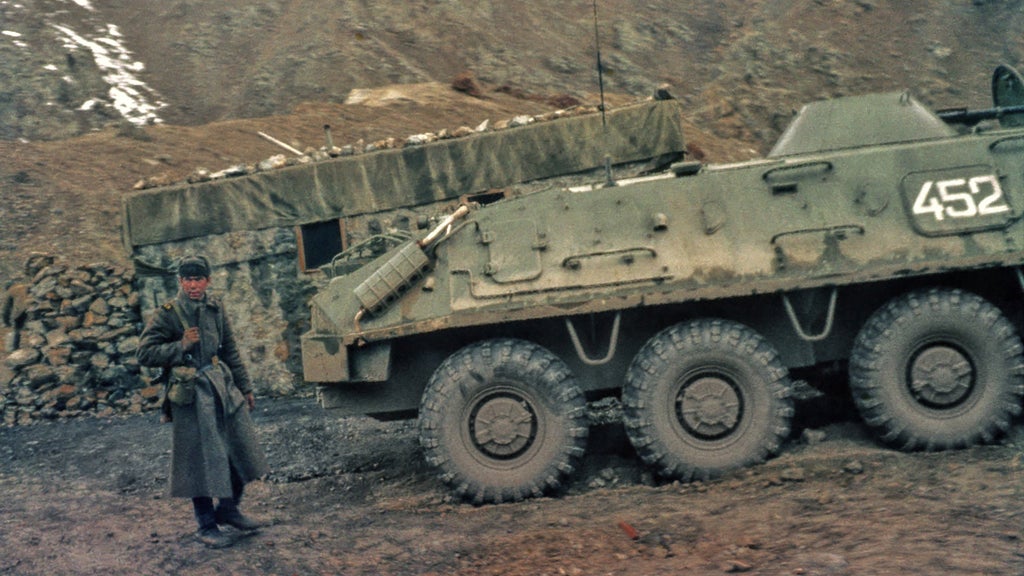
Representatives of the USSR, Afghanistan, the United States and Pakistan sign an agreement calling for the withdrawal of Soviet forces from Afghanistan. In exchange for an end to the disputed Soviet occupation, the United States agreed to end its arms support for the Afghan anti-Soviet factions, and Afghanistan and Pakistan agreed not to interfere in each other’s affairs.
In 1978, a Soviet-backed coup in Afghanistan installed a new communist government under Nur Mohammad Taraki. However, in 1979, a second coup toppled Taraki’s government in favor of Hafizullah Amin, a Muslim leader less favorable to the Soviets. In December 1979, Soviet tanks and troops invaded Afghanistan, and Amin was murdered in a Soviet-backed coup. Babrak Karmal, a product of the KGB, was installed in his place.
Despite early gains, the Soviet army met with unanticipated resistance from Muslim guerrillas, who launched a jihad, or “holy war,” against the foreign atheists. Armed by the United States, Britain, China and several Muslim nations, the muhajadeen, or “holy warriors,” inflicted heavy casualties on the Russians. In the USSR, the Red Army’s failure to suppress the guerrillas, and the high cost of the war in Russian lives and resources, caused significant discord in the Communist Party and Soviet society. In April 1988, after years of stalemate, Soviet leader Mikhail Gorbachev signed a peace accord with Afghanistan. In February 1989, the last Soviet soldier left Afghanistan, where civil war continued until the Taliban’s seizure of power in the late 1990s.
More news today
loading...