Today
20
in History
26
January
February
March
April
May
June
July
August
September
October
November
December
01
Sun
02
Mon
03
Tue
04
Wed
05
Thu
06
Fri
07
Sat
08
Sun
09
Mon
10
Tue
11
Wed
12
Thu
13
Fri
14
Sat
15
Sun
16
Mon
17
Tue
18
Wed
19
Thu
20
Fri
21
Sat
22
Sun
23
Mon
24
Tue
25
Wed
26
Thu
27
Fri
28
Sat
...
02-13-1984
Chernenko becomes general secretary of Soviet Communist Party
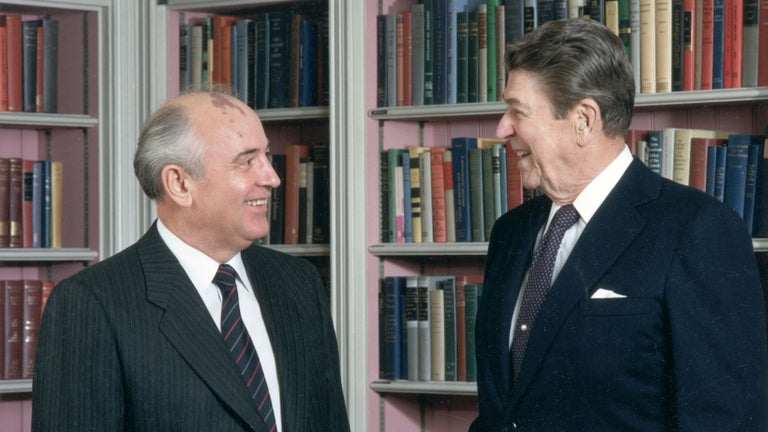
Following the death of Yuri Andropov four days earlier, Konstantin Chernenko takes over as the general secretary of the Soviet Communist Party, the ruling position in the Soviet Union. Chernenko was the last of the Russian communist “hard-liners” prior to the ascension to power of the reform-minded Mikhail Gorbachev in 1985.
Before becoming general secretary, Chernenko was little known outside of the Soviet Union. Born in 1911, he became active in communist organizations in Russia during the late-1920s. In 1931, he formally joined the Soviet Communist Party. He became something of an expert in the area of propaganda and held several lower level positions in the government during the 1940s. His fortunes changed dramatically after he became acquainted with Leonid Brezhnev in the 1950s. Brezhnev took Chernenko under his wing and as Brezhnev rose through the party hierarchy during the 1950s and 1960s, Chernenko climbed to higher levels in the Soviet bureaucracy. Brezhnev became general secretary in 1964 and served until his death in 1982. Chernenko seemed a natural choice to succeed his former mentor, but reformists within the Soviet government turned instead to Andropov. When Andropov became ill and died just 15 months later, Chernenko’s supporters overrode the reformists and he took over as general secretary.
Chernenko’s brief rule was characterized by a return to the hard-line policies of Brezhnev. He pulled back from supporting the few economic and political reforms instituted by Andropov. Russian foreign policy took on a harsher tone, and the Soviets retaliated for the U.S. boycott of the 1980 Olympic games held in Moscow by refusing to attend the 1984 summer games in Los Angeles. Declining health during the last several months of his rule, however, prevented Chernenko from making much of an impression either domestically or internationally. When he died on March 10, 1985, Mikhail Gorbachev took power and began his program of dramatic economic reforms and his efforts at improving relations with the United States, which led to the eventual dissolution of the Soviet Union in 1991.
More news today
loading...